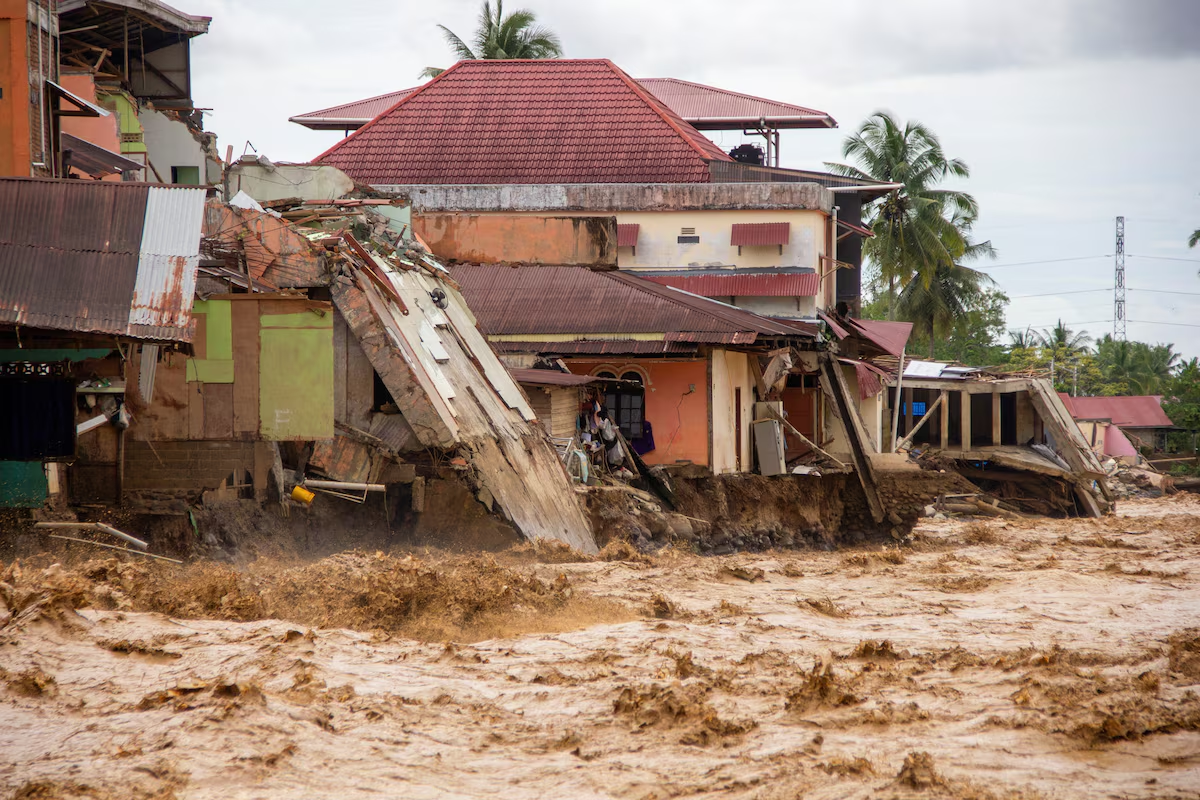
Despite being an ocean-based industry, seafood depends on land: on roads, trucks, ice plants, and power grids. When any of those fail, the supply chain stops instantly. That’s what happened in Sibolga. Landslides cut off major access routes. Trucks carrying octopus and cuttlefish from Aceh and the surrounding regions simply could not reach the processing plants.
One supplier put it bluntly in a message to his buyers:
“Road access is cut, the octopus processing plant has stopped, electricity is out, and raw material cannot arrive. Current stock is 6.5 tons. Shipments must move to January.”
Factories paused operations not because the sea was empty, but because they couldn’t get raw materials or maintain stable electricity to keep freezers and blast tunnels running.
Octopus is a delicate product to manage. It’s caught by small-scale fishers scattered across remote coastal communities. It must be transported quickly, processed quickly, and frozen quickly. When roads break, the whole system collapses.
The storms therefore created an immediate bottleneck. Even though fishing continued in some areas, the catch had nowhere to go. Local buyers competed for the little raw material still moving, pushing prices upward. Factories began prioritizing only what they could process safely, sometimes pausing production completely until conditions improved.
For buyers working with Frozenfish, the implications were clear: delays, temporary price increases, and short-term instability across multiple cephalopod products.
Natural disasters always feel sudden, but their impact on the seafood industry is unusually direct. In the time it takes for a road to collapse, the flow of octopus, cuttlefish, and coastal fish can drop to zero. Containers get rescheduled. Production queues shift. Factories scramble to protect whatever inventory they already have.
And all of this is happening just before the new year, during a period when the industry is already preparing for Ramadan demand, New Year closures, and early-year weather events.
In situations like these, the most reliable strategy is flexibility. Frozenfish often encourages buyers to adjust expectations temporarily:
Indonesia is vast, and when one region is impacted, others remain stable. Sourcing from Sulawesi, Java, or eastern Indonesia can help support continuity while Sibolga’s infrastructure recovers.
Events like the Sibolga landslides are becoming more common. Climate volatility and aging infrastructure mean disruptions will appear more frequently—and unpredictably. But they don’t need to derail supply chains. When buyers diversify, plan ahead, and maintain strong communication with suppliers, these shocks become manageable rather than catastrophic.
The recent storms remind us how human the seafood industry truly is. For all the cold storage, shipping logistics, and international contracts, the chain begins with communities on vulnerable coastlines. And when those communities are hit by nature, the entire world feels it.
Frozenfish continues to monitor conditions on the ground as the region recovers. But the story of Sibolga is already clear: the strongest supply chains are the ones built with flexibility, real visibility, and an understanding that nature—not schedules—sets the final rhythm.

We work with importers, distributors, and producers around the world to build reliable seafood supply chains backed by consistency, transparency, and trust.
.svg)


